Can Americans get legally married in Costa Rica?
Yes. Americans can marry legally in Costa Rica, and you do not need to be a resident. Most US citizens receive a 90-day tourist stamp on arrival, and that is all the status you need. Costa Rica does not require blood tests.
A US couple needs valid passports (six months of validity), an apostilled birth certificate, apostilled proof of civil status issued within one month of the wedding, two adult witnesses with valid ID, and a licensed Costa Rican notary to officiate. Any document not in Spanish needs an official translation.
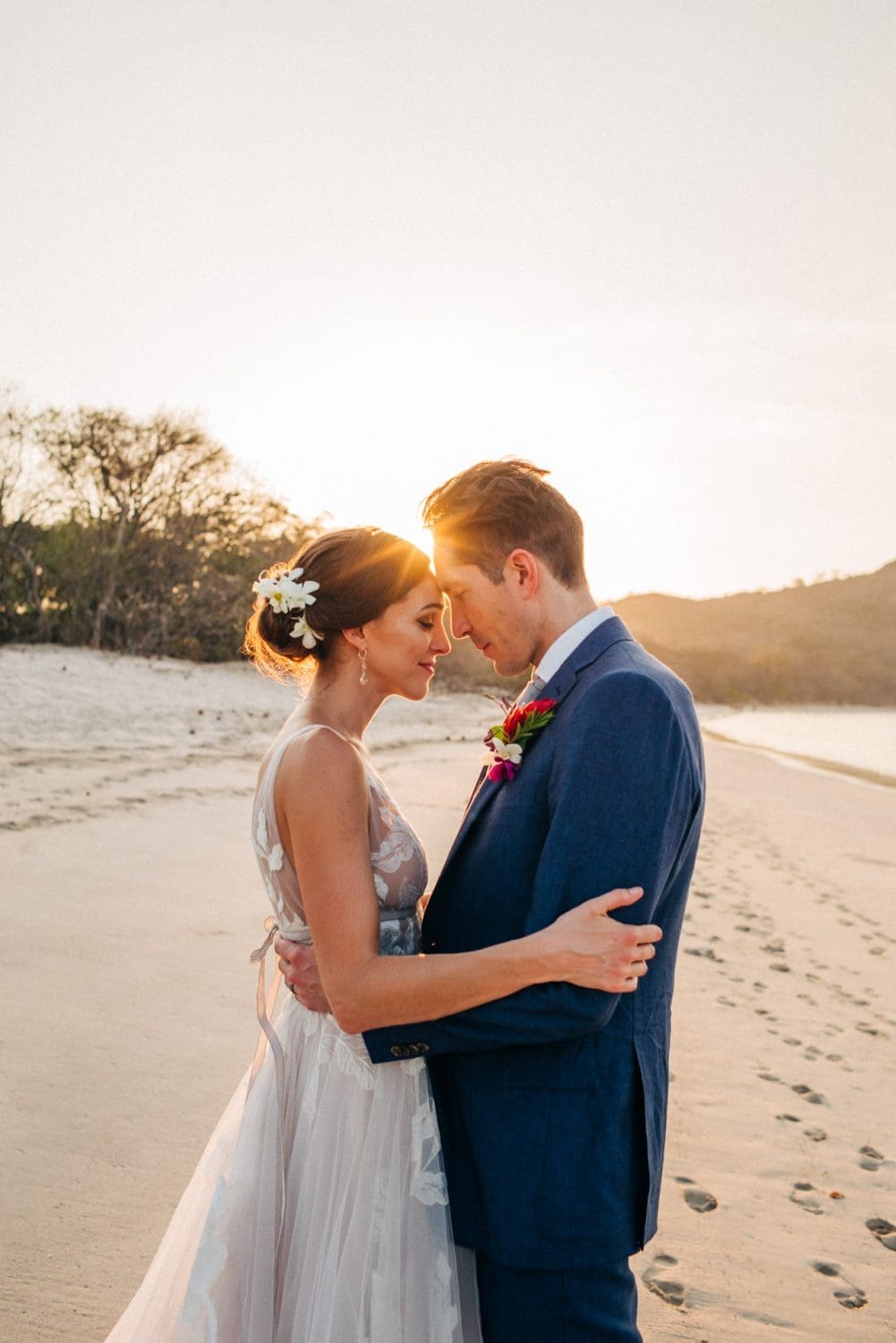
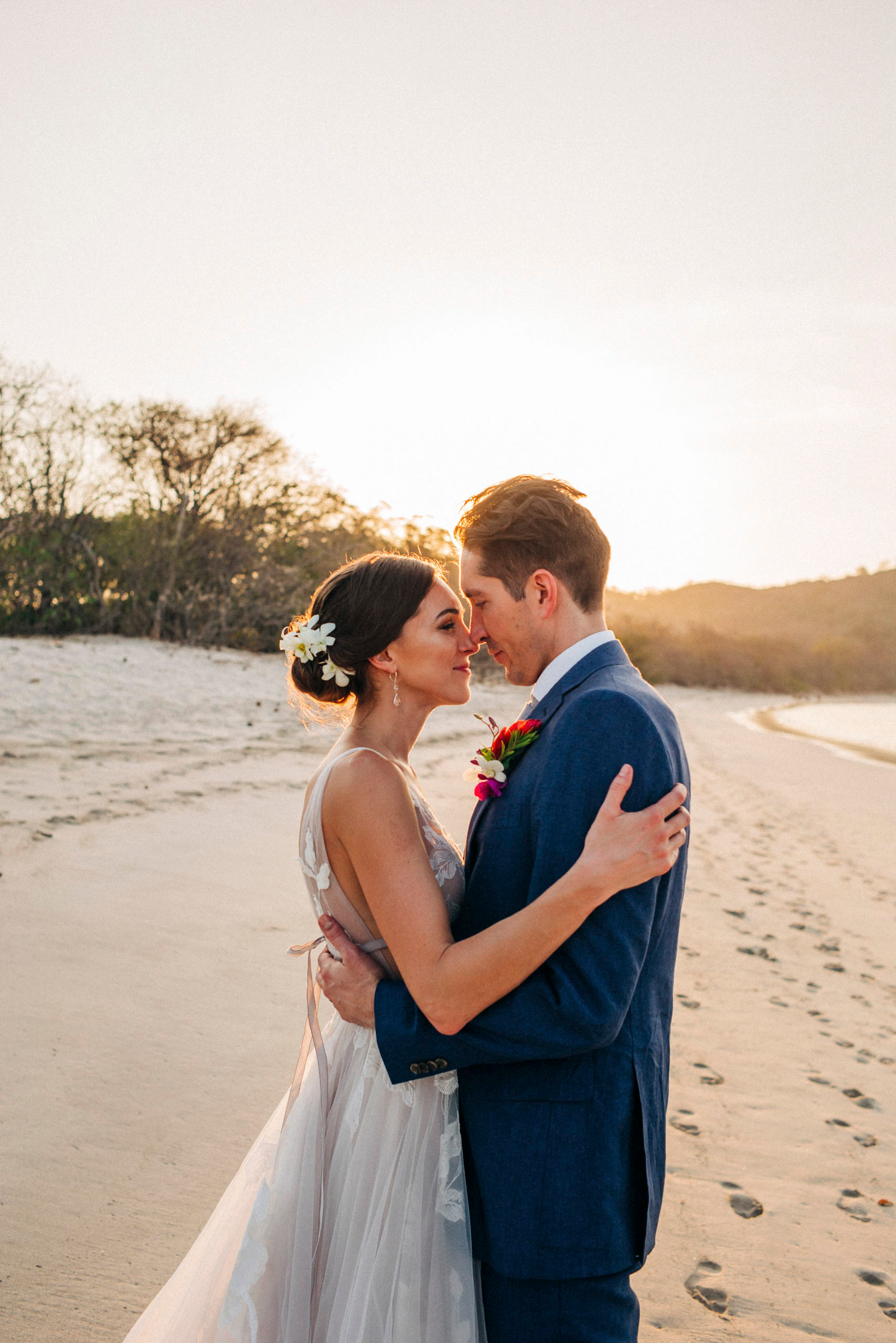
I recently photographed a couple from California who planned only a symbolic ceremony because they thought the paperwork would be complicated. With a local planner and notary, the legal side was handled in advance. The documents were signed right after sunset, barefoot on the beach in Guanacaste.
How hard is it to get married in Costa Rica?
It is not hard, but it needs preparation. There is no residency requirement, no mandatory waiting period once your documents are approved, and no minimum stay before the ceremony. The slow part is gathering and apostilling documents in your home country.
A couple from New York assumed a symbolic ceremony would be easier. After talking to a local planner, they realized the legal route took little more effort. They gathered their documents two months ahead and sent everything to the planner. By the time they arrived in Guanacaste the legal part was ready. The ceremony was at sunset, and about three weeks later they received their certificate.
Stress comes from last-minute paperwork, expired civil status certificates and missing translations. My advice: hire a local planner or law firm early. The system is orderly, but it runs in Spanish with formal procedures.
How long does it take to get a marriage license in Costa Rica?
There is no waiting period like the ones some US states have. Once your documents are approved, the ceremony can go ahead. The time is in two places: preparing documents before the wedding (often several weeks) and registration after it.
The notary registers the marriage with the Civil Registry after the ceremony, and the official certificate can then be apostilled for use abroad. Registration and issue typically takes 2 to 3 weeks.
A couple from Illinois arrived four days before their ceremony. Because they had prepared everything months earlier, the ceremony ran on schedule, and three weeks later they heard their certificate was registered. You do not need to be in Costa Rica weeks ahead. Most couples arrive a few days before the wedding.
What is the difference between a legal and a symbolic wedding in Costa Rica?
A legal ceremony is a marriage under Costa Rican law. A symbolic ceremony has no legal standing, so anyone can lead it, anywhere.
- Legal: needs the documents above, a licensed notary and two witnesses present, and registration with the Civil Registry.
- Symbolic: no paperwork. Many couples marry legally at home and keep the Costa Rica ceremony for the celebration. You can have a friend or family member officiate or write your own ceremony.
Whether the ceremony is legal or symbolic makes no difference to the photographs. I have photographed both many times, and the emotion looks the same.
Can my photographer be a witness?
Yes. Legal ceremonies need two adult witnesses with valid ID, and when you elope your photographer can serve as one. It has happened more often than you would think. Sometimes it is just the two of you, your notary and me with my camera, and it is actually quite special.
Frequently Asked Questions About Costa Rican Wedding Legal Requirements.
Discovering the legal aspects of getting married in Costa Rica can feel daunting, especially when you’re planning a destination wedding. Here are some of the most frequently asked questions that may help clarify the process and give you peace of mind.
1. Do I need a Costa Rican lawyer to get married in Costa Rica?
While you don’t have to hire a lawyer for the entire process, you will need a Costa Rican lawyer to help prepare your legal documents, such as the marriage deed and any necessary affidavits. The lawyer ensures that all the paperwork is in order and complies with Costa Rican law.
2. Can I get married in Costa Rica if I’ve had a previous marriage annulled?
Yes, if you have had a previous marriage annulled, you can still get married in Costa Rica. However, you will need to provide the annulment documents, which should be apostilled and translated into Spanish, just like the divorce or death certificates of previous spouses.
3. What happens if my partner and I don’t meet the Costa Rican wedding legal requirements?
If you don’t meet the legal requirements for marriage in Costa Rica, your marriage ceremony cannot proceed. It’s important to ensure you have all the necessary documents, including valid identification, birth certificates, civil status certificates, and witnesses who meet the requirements.
4. Can same-sex couples get married in Costa Rica, and is there any difference in the legal process?
Yes, same-sex couples can get married in Costa Rica. The process is the same as for opposite-sex couples. You will need to submit the same documents and meet the same Costa Rican weddings legal requirements. Costa Rica legalized same-sex marriage in 2020, and it is fully recognized by the country.
5. Is possible to get married in Costa Rica if I’m a foreigner without a Costa Rican residency?
Yes, foreigners can get married in Costa Rica even if they do not have residency. You will need to provide a valid passport, a birth certificate, and proof of single status, along with other required documents, as stated in the legal requirements.
6. How long is the waiting period between submitting my marriage request and the actual ceremony in Costa Rica?
7. How do I get my Costa Rican marriage certificate recognized in my home country?
After your marriage ceremony, the notary will register the marriage with the Costa Rican government. You will then receive an official marriage certificate, which can be apostilled and translated into your home country’s official language, making it valid for use abroad.
8. Can I marry in Costa Rica without a valid passport?
No, you cannot get married in Costa Rica without a valid passport if you are a foreigner. A passport is required for identification purposes and must be valid for at least six months from the wedding date.
9. What if one of the witnesses to my wedding is not available on the day of the ceremony?
Typically, photographers or other professionals involved in the wedding can serve as witnesses. If a witness is unavailable on the wedding day, you can arrange for another qualified person to step in, as long as they meet the legal requirements and are over 18 years old.
10. Are there any specific Costa Rican wedding legal requirements for getting married on a private property or a remote location in Costa Rica?
There are no specific Costa Rican wedding legal requirements tied to getting married in a remote or private location in Costa Rica. As long as the wedding is officiated by a notary public, judge, or Catholic priest, the location does not affect the legality of the marriage. However, you will need to ensure that the venue meets any logistical needs for the witnesses and the officiant.
11. What documents are required to get married in Costa Rica?
• Valid passport (at least six months of validity).
• An Apostilled birth certificate (official translation if not in Spanish).
• Apostilled certificate of civil status (proof of being single, divorced, or widowed, issued within one month of the wedding date, with translation if not in Spanish).
• Valid Costa Rican ID (cédula).
12. How do I get a marriage certificate in Costa Rica?
After the wedding, the notary registers the marriage with the Civil Registry. Once processed, an official marriage certificate is issued. This certificate can be apostilled and translated for recognition in your home country.
13. Do I need to translate my documents for a wedding in Costa Rica?
Yes, any documents not in Spanish (such as birth certificates or civil status certificates) must be officially translated.
14. What is the process for registering a marriage in Costa Rica?
• The notary public officiates the wedding and prepares the marriage deed.
• The marriage is then registered with the Civil Registry.
• After registration, you’ll receive a marriage certificate, which can be apostilled if required for international use.
15. Can foreigners legally get married in Costa Rica?
Yes, foreigners can legally marry in Costa Rica as long as they provide the necessary documents, including valid passports, birth certificates, and civil status certificates.
16. Is a Costa Rican marriage valid in my home country?
Marriages performed in Costa Rica are legally recognized worldwide. You may need to apostille and translate your Costa Rican marriage certificate to meet your home country’s requirements.
17. Do I need a lawyer or notary public to get married in Costa Rica?
Yes, only notaries, judges, and Catholic priests can legally officiate weddings in Costa Rica. A lawyer who is a licensed notary public will prepare the legal documents and officiate non-religious ceremonies.
18. Which rules apply for witnesses at a Costa Rican wedding?
You need two witnesses who:
• Provide valid identification (Costa Rican cédula or a passport for foreigners).
• Must be present during the ceremony to sign the marriage deed and affirm the couple’s legal eligibility to marry.
19. What are the restrictions or prohibitions for marriage in Costa Rica?
You cannot marry in Costa Rica if:
• Either partner is already married.
• The partners are closely related (siblings, parents, grandparents, or adoptive family).
• One partner was convicted of murdering the other’s spouse.
• Either partner is under 18.
20. How long does it take to finalize the legal process of marriage in Costa Rica?
The legal process, including registering the marriage and issuing the official marriage certificate, typically takes approximately 3 weeks. Once the certificate is issued, it can be apostilled and translated if needed for use in your home country.